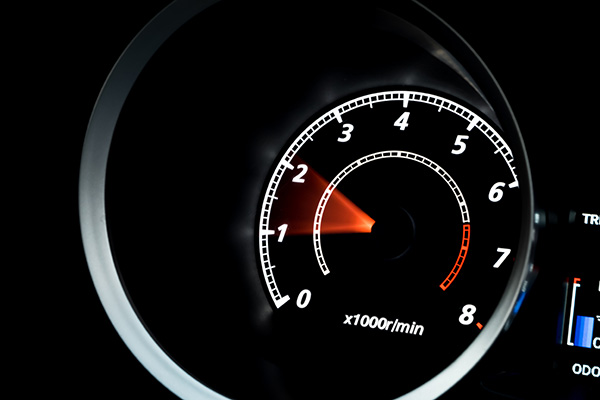
An engine should settle into a steady idle once it is running. The RPM needle might move slightly when the A/C turns on, the steering is turned, or electrical demand changes, but it should not keep rising and falling in a way you can feel. When the idle starts hunting up and down, the engine is trying to correct for something.
That kind of symptom can be annoying at first, but more concerning if the car starts shaking, stalling, or hesitating when you come to a stop. RPM fluctuations at idle can come from the air, fuel, ignition, sensors, or even the charging system, so the cause needs to be checked rather than assumed.
Air Leaks Can Make Idle Unstable
The engine needs a measured amount of air to idle correctly. If extra air sneaks in through a cracked hose, loose intake boot, leaking gasket, or vacuum leak, the computer has to keep adjusting fuel delivery to compensate. That can make the RPM rise and fall at a stop.
Vacuum leaks can be tricky because the car may drive better once you accelerate. At idle, the engine is more sensitive to small air changes, so the symptom becomes easier to notice. A hissing sound, rough idle, lean code, or higher-than-normal idle speed can all point in this direction.
A Dirty Throttle Body Can Change Airflow
The throttle body controls how much air enters the engine. Over time, carbon and residue can build up around the throttle plate. When that happens, airflow at idle can become less consistent, and the engine may struggle to hold a steady speed.
Some vehicles can adjust around minor buildup for a while. Eventually, the correction reaches its limit, and the idle starts acting strangely. A dirty throttle body can cause RPM surging, stalling at a stop, or a delay in the engine settling after startup. Cleaning may help in some cases, but the system should be checked properly before calling it fixed.
Idle Air Control Or Electronic Throttle Problems
Older vehicles may use an idle air control valve to manage airflow at idle. Newer vehicles usually control idle through an electronic throttle body. Either system can create RPM fluctuation when it gets dirty, sticks, fails, or receives bad information from another sensor.
A faulty idle control system can make the engine idle too high, too low, or hunt up and down. The symptom may get worse when the A/C is turned on because the engine has to compensate for the extra load. If the system cannot react correctly, the RPM will keep moving instead of settling.
Fuel Delivery Issues Can Cause Surging
Fuel problems can also make the idle unstable. A weak fuel pump, a dirty fuel injector, a restricted filter on vehicles that use one, or a poor injector spray pattern can keep the engine from getting consistent fuel at low speed. The computer keeps trying to correct the mixture, and the RPM can move with those corrections.
Clogged injectors are a common example. One cylinder may not get the same fuel spray as the others, so the engine feels uneven. The issue can manifest as shaking, reduced fuel economy, hesitation, or a check engine light. Regular maintenance helps reduce fuel and ignition problems that can show up as idle complaints later.
Ignition Wear Can Show Up First At Idle
Spark plugs, ignition coils, and plug wires on some vehicles can all affect idle quality. Worn spark plugs may still fire well enough during steady driving, but struggle at idle or under load. A weak coil can act the same way, creating a misfire that comes and goes.
When one cylinder does not fire cleanly, the engine loses balance. That can make the RPM needle jump, the cabin shake, or the engine feel like it is about to stall. If the check engine light is flashing, the vehicle should not be driven far because an active misfire can damage the catalytic converter.
Sensors Can Send The Wrong Information
Modern engines depend on sensors to manage idle speed, fuel mixture, timing, and emissions. A dirty mass airflow sensor, faulty oxygen sensor, bad coolant temperature reading, or throttle position issue can all affect how the engine behaves at idle.
The hard part is that sensor problems can look like other problems. A sensor may report bad information because it failed, or it may report unusual readings because a vacuum leak, fuel issue, or wiring fault is affecting the system. That is why an inspection should include live data and testing, not just a quick parts replacement.
Electrical Load And Charging Problems Can Affect Idle
The engine has to respond when electrical demand changes. Headlights, A/C, blower speed, heated seats, and other accessories place a load on the charging system. If the battery is weak, the alternator is unstable, or the ground connection is poor, the engine can exhibit RPM changes.
You may notice the idle dip when the A/C compressor cycles or when the steering is turned at low speed. A small dip can be normal. A repeated surge, near-stall, or flickering lights point toward something that needs testing. Idle problems are not always strictly engine-related.
Get Idle And Engine Diagnostics In Huntington Beach, CA, With H B Auto & AC
If your RPM rises and falls at idle, H B Auto & AC in Huntington Beach, CA, can check the air, fuel, ignition, sensor, and charging systems to identify the cause of the unstable idle.
To get the issue checked before it leads to stalling or rougher performance, contact us to schedule an appointment.