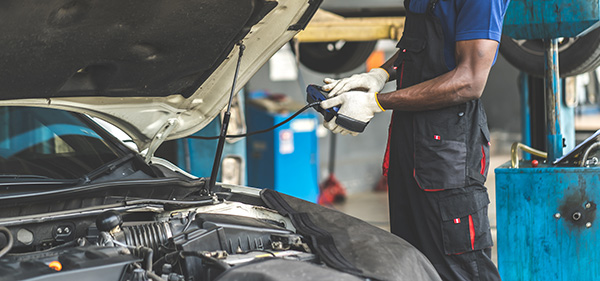
A new whining sound from the engine bay can be annoying at first and then hard to ignore. You might hear it when you start the car, when you turn the steering wheel, or when engine speed climbs past a certain point.
It usually means a belt, pulley, pump, or bearing is starting to wear out even if the car still drives normally.
How Drivers Describe a Whining Noise
From the driver’s seat, whining noises usually fall into a few patterns. Some sound like a steady high note that rises and falls with rpm, others come in only at certain speeds or when you switch accessories on. You may notice it most in parking garages, drive-through lanes, or next to walls where sound reflects back at you.
Common Sources of Whining Under the Hood
The most common culprits include:
- Serpentine belts that are glazed, loose, or slipping on pulleys
- Idler and tensioner pulleys with worn bearings
- Power steering pumps that are low on fluid or internally worn
- Alternators with bearings starting to fail
Belt and Pulley Problems That Create High-Pitched Sounds
On many engines, a single serpentine belt drives the alternator, power steering pump, A/C compressor, and more. As that belt ages, the rubber can harden, crack, or glaze, which reduces grip and makes it more likely to slip. A loose or worn belt often whines or squeals right after start-up or when you switch on a heavy load like the air conditioner.
Pulleys and tensioners are just as important. Their bearings should spin smoothly and quietly; once they wear, they can produce a whining or growling sound that changes with rpm. If a pulley locks up or a belt snaps, you can suddenly lose charging, cooling, or power steering, so noisy hardware is worth checking before it fails completely.
When Power Steering Pumps and Alternators Start to Whine
Hydraulic power steering pumps work hardest when you turn the wheel at low speed. If the fluid is low, aerated, or very old, the pump can pull in air and start to whine whenever you park or steer sharply. You might also feel heavier steering.
Alternators can create similar noises when their internal bearings or diodes begin to fail. A weak alternator often brings other clues, such as dimming lights, a battery warning on the dash, or slow cranking after the car has sat. Our technicians like to match the sound they hear with charging system tests so we know whether the alternator is truly the problem.
Simple Checks You Can Do Before Your Appointment
You do not need tools to gather information that helps with diagnosis. A few safe checks include:
- Notice whether the noise happens only on cold starts, only when hot, or all the time
- Listen for changes while turning the steering wheel at idle in an open parking lot
- Turn the air conditioner on and off to see if the sound appears or changes
- Glance at the visible part of the belt for cracks, missing chunks, or shiny glazed areas
If you suspect a fluid issue, you can visually check levels with the markings on the reservoirs, but avoid opening hot systems or removing caps you are not familiar with.
When a Whining Noise Needs Fast Attention
A mild, occasional whine that does not change much can usually wait for a scheduled visit, but it is still worth mentioning. The concern goes up when the sound suddenly gets louder, appears with a burning smell, or is joined by warning lights or stiff steering, and a belt that squeals constantly or a pulley that visibly wobbles can fail without much notice.
If the steering becomes very heavy, the battery light turns on, or the temperature gauge climbs while the noise is present, it is safer to stop driving. Have the car inspected.
Get Engine Noise Diagnosis in Huntington Beach, CA, with H B Auto & AC
We can track down whining, squealing, or growling sounds from under the hood with a focused inspection and test drive. We check belts, pulleys, pumps, and the charging system so you know exactly what is causing the noise and what it will take to fix it.
Call H B Auto & AC in Huntington Beach, CA, to schedule an engine noise diagnosis and get your car sounding normal again.