A/C leaks are frustrating because the cooling usually fades slowly, not all at once. One week, it feels a little weaker in traffic, then you start turning the fan higher, then a hot day finally makes it obvious. By that point, it is easy to assume the system just needs refrigerant and nothing else.
Most of the time, there is a reason the charge dropped, and it is worth finding it.
How Refrigerant Leaks Usually Start
Refrigerant does not get used up like fuel. If the system is low, it escaped through a seal, a connection, or a damaged component. Many leaks start as a light seep that only shows up under pressure, which is why they can be hard to spot from a quick look.
Heat cycling plays a big role. The A/C system expands and contracts constantly, and rubber seals age and harden over time. A small seep may stay quiet for months, then become noticeable as the weather heats up and the system runs more often.
Most Common Leak Points In An A/C System
Some leak points are simply more common because of how the system is built. O-rings at hose connections can flatten with age. Schrader valves at the service ports can seep. Condensers can develop tiny leaks from road debris impacts since they sit in the front and take a beating.
Here are several spots technicians commonly check first:
- Service port valves and caps
- Hose connection O-rings at fittings
- The condenser face and end tanks
- Compressor shaft seal and case seams
- Evaporator core area inside the HVAC housing
A leak can also be at a hard line that has rubbed through from vibration or a clamp that is missing. We see that kind of issue when the leak is small but persistent and the vehicle has been driven for years on rougher roads. Fixing the true source matters more than simply restoring the charge.
Signs Your Refrigerant Level Is Dropping
The first sign is often a cooling system that is decent at speed but weak at idle, especially on hotter days. The system can still make cold air, but it cannot keep pressures in the ideal range. You may notice the compressor cycling more frequently, or the air starts cold and then warms up during longer drives.
Another clue is a change in how the A/C behaves during quick restarts. If it takes longer to cool after a stop, or it never reaches the same vent temperature it used to, low charge is a strong suspect. If you have to keep recharging every season, that is not bad luck, it is a leak.
How Quick Top-Offs And Stop-Leak Products Backfire
A top-off can temporarily improve cooling, but it can also hide the problem and make the next visit harder. Overcharging is a common risk when refrigerant is added without recovering and weighing what is already in the system. Too much refrigerant can raise pressures and reduce performance, and it can stress components that are already aging.
Stop-leak products are even riskier. They can contaminate recovery equipment and leave residue that clogs small passages in the system. If the leak is real, it still needs to be sealed properly, and a chemical shortcut can create extra work and extra cost later.
How Leaks Are Found The Right Way
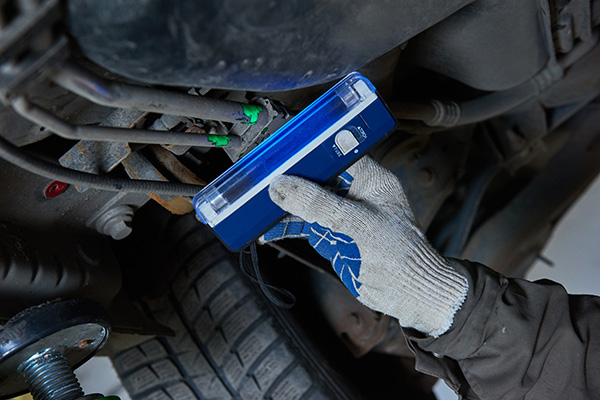
A proper leak check starts with verifying the system charge and looking for obvious oil residue at fittings and components. The Refrigerant carries oil, so leak areas often look damp or dusty with grime stuck to them. From there, shops may use dye or an electronic leak detector to pinpoint the source.
An inspection also includes checking cooling fans and condenser airflow because high pressures can worsen small leaks over time. If the condenser is blocked or the fans are weak, the system runs hotter and harder. That extra strain can push a borderline seal into a steady leak.
What Repairs Actually Fix The Problem
Once the leak source is confirmed, the fix is usually straightforward, even if access takes time. A leaking service valve can be replaced. O-rings at a connection can be renewed. A condenser that has pinhole leaks from road debris usually needs replacement. Evaporator leaks are more complex due to dash access, but they can be resolved cleanly once the source is verified.
After the repair, the system should be evacuated and recharged by weight. That step matters because the A/C charge amount is precise, and the correct amount helps the system cool efficiently and keeps pressures stable. When we see repeat A/C complaints, they often trace back to a leak that was never sealed or a charge that was never measured.
How To Reduce The Chances Of Repeat Leaks
You cannot prevent every leak, but you can reduce the conditions that push the system harder than it needs to. Keeping the condenser area clean of debris helps airflow and keeps pressures from running unnecessarily high. Running the A/C periodically, even in cooler months, can help keep seals from drying out.
This is also where regular maintenance makes the system last longer, especially if it includes checking fan operation and catching small seepage early. If you notice cooling fading slowly, scheduling service before the hottest week of the year usually gives you more options. Waiting until it is barely cooling tends to make the next step feel more urgent than it needs to be.
Get A/C Refrigerant Leak Repair In Huntington Beach, CA, With H B Auto & AC
If your A/C is not cooling like it used to, H B Auto & AC in Huntington Beach, CA, can find the leak source, repair it properly, and recharge the system to the correct spec. We will also check airflow and pressure behavior so you are not back in the same spot a month later.
Book your visit and get your cold air back.