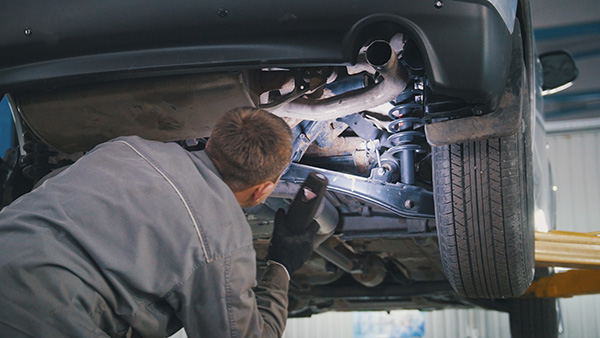
Tire wear is one of those things that sneaks up on you. One day, the tires look fine, and then suddenly the edges are bald, or the tread is choppy and noisy. A lot of drivers assume it’s just cheap tires or bad luck, but in many cases, the suspension is the real reason the tires didn’t stand a chance.
When parts get loose or worn, the wheel doesn’t stay planted and aligned the way it should, and the tire pays the price first.
Why Suspension Wear Shows Up On Tires Before You Feel It
You can have suspension play without obvious clunks or dramatic handling issues. At first, the car still drives, and you might only notice a little drift, a slight vibration, or extra road noise. Meanwhile, the tires are getting scrubbed, cupped, or feathered every time you drive.
Road conditions matter too. Rough pavement, potholes, and driveway dips put extra stress on joints and bushings. Once a small amount of play starts, it tends to grow, and tire wear often becomes the first clear symptom.
1. Worn Shocks Or Struts That Let The Tire Bounce
Shocks and struts control how the tire stays in contact with the road. When they’re weak, the tire bounces over bumps instead of staying pressed down consistently. That bouncing creates cupping, which appears as a scalloped pattern around the tread and often produces a humming noise that gets louder with speed.
A quick clue is how the car behaves over dips and bumps. If it feels floaty, takes too long to settle, or feels unsettled on the freeway, weak damping may be part of the problem.
2. Bad Ball Joints That Let Alignment Shift Under Load
Ball joints allow the suspension to move while keeping the wheel stable. When a ball joint wears, the wheel can change angle slightly as you brake, accelerate, or turn. That means the alignment isn’t staying consistent. Tires don’t like that. You can end up with rapid edge wear or a weird wear pattern that doesn’t match a simple “needs an alignment” story.
Ball joint wear can also show up as a clunk over bumps or a vague feeling in the steering, but it’s not always loud at first.
3. Control Arm Bushings That Create Feathered Tread
Control arm bushings are meant to flex, but they should not allow the wheel to shift around. When they get soft or torn, the wheel can move backward or sideways under braking and acceleration. That movement can cause feathering, where one edge of the tread feels sharp when you run your hand across it.
Drivers often notice pulling, wandering, or a car that feels less stable during braking. The tires wear faster because they’re scrubbing instead of rolling cleanly.
4. Tie Rod Wear That Makes The Tire Scrub
Tie rods connect your steering input to the wheels. When they wear, the wheel can toe in and out slightly as you drive. Even a small toe change can destroy tires quickly. This type of wear often shows up as inside or outside edge wear and can make the steering feel loose around center.
If you can’t keep the car tracking straight without constant small corrections, or the steering feels vague, tie rods and related steering parts should be inspected.
5. Wheel Bearing Or Hub Play That Alters the Contact Patch
Wheel bearings are usually talked about for noise, but looseness can affect wear too. If the hub has play, the tire’s contact patch can shift slightly, which can accelerate uneven wear. It may also create a growl that changes with speed or turning, which many drivers mistake for tire noise.
This is one reason tire complaints sometimes turn into bearing repairs. The tire pattern and the sound together tell the story.
6. Bent Components Or Ride Height Issues After Impacts
A hard pothole hit or curb impact can bend a control arm, a strut, or even the knuckle. The car may still drive, but the alignment angles are now off in a way that adjustments can’t fully correct. That’s when you see weird wear patterns that show up fast, even after an alignment.
Ride height matters too. Sagging springs or uneven height side-to-side changes the alignment geometry. If one corner sits lower, that tire may carry the load differently and wear differently.
A Practical Plan To Save Tires Before They’re Toast
If you notice uneven wear starting, don’t wait until cords show. Catching it early can save the tire or at least prevent ruining the next set. Look for early clues like steering drift, road noise that wasn’t there before, or a vibration that builds with speed. Also, check pressures regularly, because underinflation can exaggerate wear issues caused by loose parts.
From a service perspective, the smart move is to inspect the suspension and steering for play first, then align the vehicle once the parts are tight. Aligning a car with loose components is like trying to straighten a picture frame while the nail is falling out of the wall.
Get Suspension And Alignment Help In Huntington Beach, CA With H B Auto & AC
If your tires are wearing unevenly, the car is drifting, or you’re hearing new road noise, it’s worth having the suspension and steering checked before you burn through another set of tires. We’ll inspect for worn components, identify what’s causing the wear pattern, and recommend a plan that gets your handling back on track.
Schedule a suspension and alignment inspection in Huntington Beach, CA with H B Auto & AC, and let’s help your next set of tires last the way they should.